
Tactica: First Contact
Bringing the depth of tabletop strategy into virtual and mixed reality.
VR/MR Strategy Game | Game Direction, Systems Design & Creative Leadership | 2024–2025
Platform: Meta Quest
My Role: Lead Game Designer / Game Director
Studio: Arti XR
About the Game
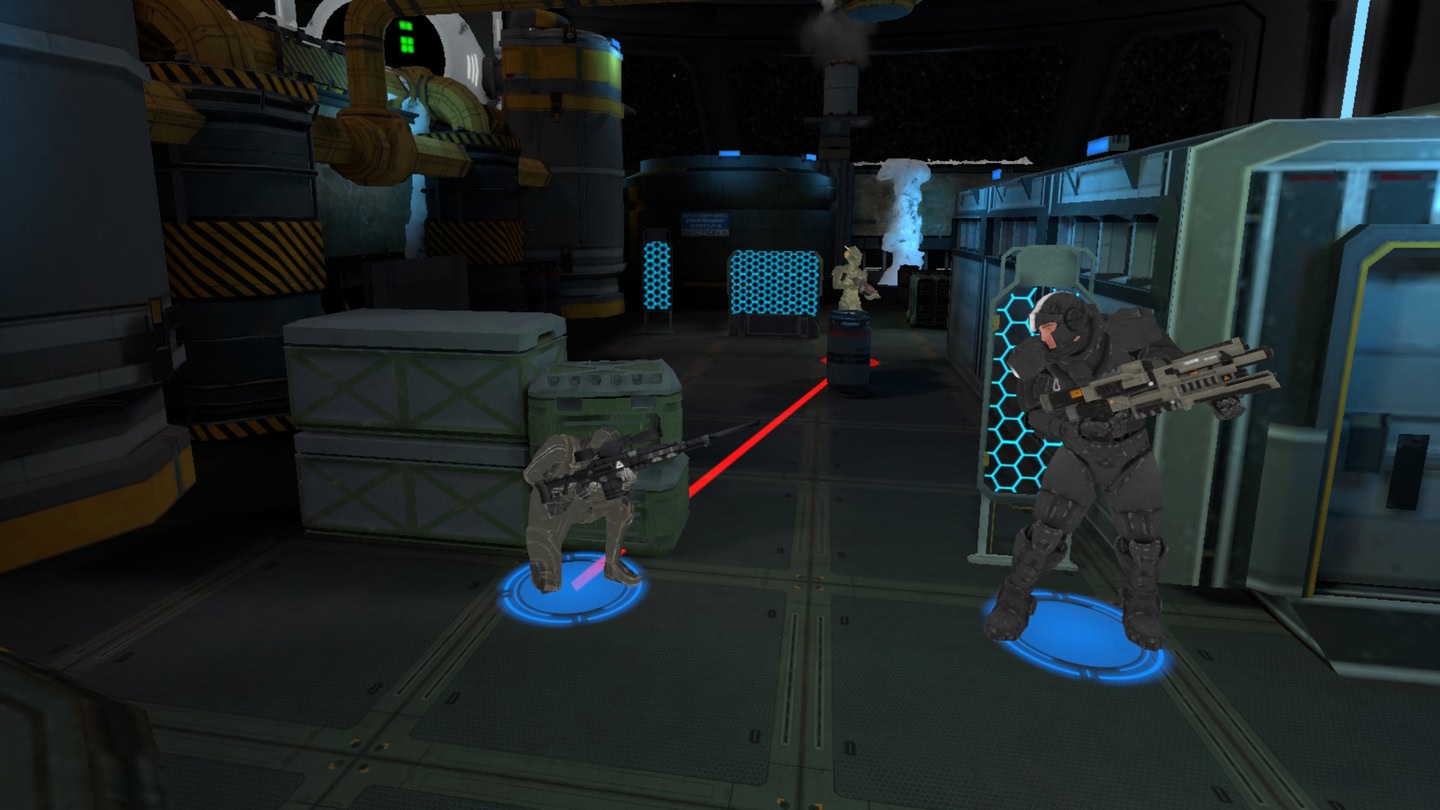
Tactica: First Contact is a science-fiction turn-based strategy game that brings the experience of tabletop wargaming into virtual and mixed reality.
Players command an elite squad across immersive battlefields, utilizing character abilities, tactical positioning, and skill cards to overcome increasingly challenging encounters.
Rather than simply translating traditional strategy controls into VR, the goal was to create an experience that embraced the medium, allowing players to observe and command the battlefield from a new perspective.



My Role & Responsibilities
As Lead Game Designer and Game Director, I was responsible for shaping the creative vision and gameplay direction of Tactica.
My work combined hands-on game design with creative leadership, production coordination, and close collaboration with programmers and artists.
Creative Direction: Established and maintained the game's design vision, defining gameplay priorities, feature scope, and the intended player experience.
Systems Design: Designed and prototyped interconnected gameplay mechanics, including character skills, skill-card progression, team compositions, and ability synergies.
Combat & Mission Design: Developed tactical encounters, combat interactions, and mission structures to create meaningful strategic choices.
Narrative Design: Developed the game's story, science-fiction setting, and lore, connecting the narrative with the gameplay experience.
Cross-functional Leadership: Coordinated design implementation across engineering and art, ensuring the game's creative goals remained achievable within production constraints.
The Design Challenge
One of the biggest challenges was balancing tactical depth with accessibility in an immersive environment.
Traditional strategy games rely heavily on familiar interfaces, menus, and camera controls. Translating that experience into VR/MR required us to reconsider how players interacted with information, units, abilities, and their surroundings.
Another challenge was creating interconnected systems that encouraged meaningful choices without overwhelming players.
Character abilities needed to feel individually valuable while also working together through team compositions and skill combinations.


Designing Interconnected Systems
A major focus of my work was developing the relationships between combat abilities, skill cards, and tactical decisions.
Rather than designing individual mechanics in isolation, I approached them as parts of a larger system.
The goal was to make team composition, ability selection, positioning, and encounter design influence one another.
This required continuous prototyping, balancing, playtesting, and iteration to find the right level of complexity and strategic freedom.
From Vision to Playable Experience
Throughout development, I worked closely with the team to translate design concepts into functional game systems.
This involved defining requirements, communicating design intent, reviewing implementations, addressing gameplay challenges, and refining features through testing.
I also worked to maintain consistency between gameplay, narrative, art direction, and the overall player experience.

What I Took Away
Tactica was an opportunity to work on a much deeper and more interconnected gameplay experience than traditional casual mobile titles.
It strengthened my experience in creative direction, complex systems design, and multidisciplinary leadership.
Above all, it reinforced the importance of making complexity understandable. A game can have many interconnected mechanics, but its success depends on whether players can understand their choices and feel the consequences of their decisions.